Make a Double Shot of Espresso in 7 Easy Steps
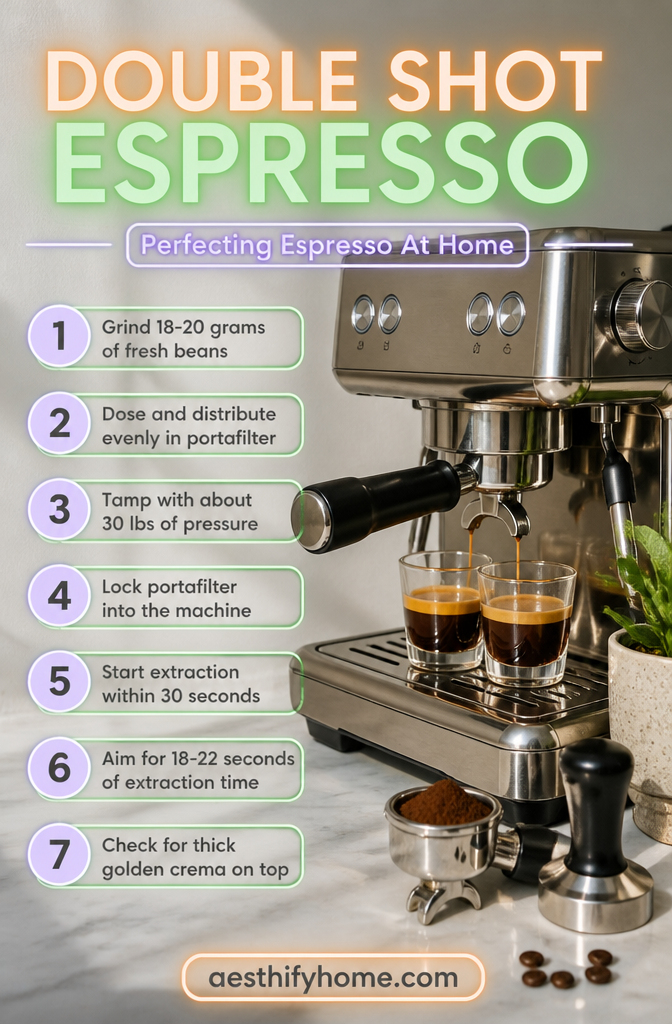
A double shot of espresso can turn your morning coffee routine into a small ritual worth looking forward to. The good news is that you do not need a café or years of training to make one at home. With a little attention to grind, dose, timing, and technique, your espresso machine can produce a balanced, flavorful shot with rich crema.
This guide walks you through seven practical steps, plus barista tips for troubleshooting and fine-tuning. Whether you are setting up a new coffee station or refining your existing home brewing setup, these coffee recipes and techniques will help you get consistent results.
Step 1: Prepare Your Coffee Station
Before you touch the grinder, take a moment to set up your workspace. A tidy coffee station makes the process smoother and reduces the chance of spills, uneven dosing, or rushed steps.
- Warm the espresso machine by running water through the group head and placing your cups on the drip tray.
- Place your portafilter in the group head briefly so it heats up, then dry it completely.
- Gather a tamper, scale, timer, and a small container for spent coffee.
- Wipe the shower screen and drip tray so old grounds do not affect flavor.
- Fill the water tank with fresh, cold water and make sure the machine is at operating temperature.
Warm equipment helps maintain temperature stability, which is essential for balanced extraction. Dry surfaces also improve how the coffee grounds sit in the basket.
Step 2: Choose and Dose Your Coffee
For a classic double shot, start with 16–18 grams of freshly roasted coffee. This range suits most double baskets and gives you enough body without overwhelming the cup. If your basket is smaller, check its capacity and dose accordingly.
Freshness matters. Coffee begins to lose aroma and complexity after roasting, so buy beans in quantities you can finish within a few weeks. Store them in an airtight container away from heat and light.
Use a scale to measure your dose. Eyeballing coffee is one of the most common home brewing mistakes because even small changes in dose alter extraction. If you do not have a scale yet, consider adding one to your coffee station—it is one of the most useful tools for repeatable espresso.
Step 3: Grind to the Right Size
Grind size is the steering wheel of espresso. Too coarse, and water rushes through, producing a thin, sour shot. Too fine, and water struggles to pass, creating a slow, bitter extraction.
Aim for a texture similar to fine table salt, then adjust based on your results:
- If the shot runs too fast and tastes sour, grind finer.
- If it runs too slowly and tastes bitter or ashy, grind coarser.
- Make small adjustments rather than large jumps.
Grind immediately before brewing. Ground coffee begins losing volatile aromas quickly, so grinding fresh helps preserve sweetness and complexity. If your grinder has a stepless dial, experiment with tiny increments to find the sweet spot for your beans and machine.
Step 4: Distribute and Tamp Evenly
Even distribution is just as important as grind size. If the coffee bed is uneven, water will follow the path of least resistance, leading to channeling—thin streams that under-extract some grounds while over-extracting others.
After dosing into the portafilter:
- Tap the side gently or use a distribution tool to level the bed.
- Place the tamper straight down and apply firm, consistent pressure.
- Keep your wrist and forearm aligned to avoid tilting the puck.
- Finish with a smooth, level surface.
You do not need extreme force. The goal is a compact, even puck with no gaps around the edges. Wipe away loose grounds from the rim so the portafilter seals properly.
Step 5: Lock In and Start the Shot
Insert the portafilter firmly into the group head and start brewing immediately. Delays can cause the coffee to dry out or lose temperature consistency.
Place your scale and cup under the spouts, then start your timer as the pump engages. Watch the first drops carefully. They should appear after a few seconds, then build into a steady, honey-like stream.
A useful starting point for a double shot is:
- Dose: 16–18 grams
- Yield: roughly double the dose, or 32–36 grams
- Time: about 25–30 seconds
These are guidelines, not rigid rules. Adjust based on taste. If the shot tastes sharp or thin, let it run a little longer or grind finer. If it tastes dry or bitter, shorten the shot or grind coarser.
Step 6: Evaluate Crema, Aroma, and Taste
Crema is the golden layer on top of a fresh espresso. It should look smooth and persistent, but crema alone does not guarantee a great shot. Taste is the final judge.
- A balanced shot should have sweetness, pleasant acidity, and a clean finish.
- Sourness often indicates under-extraction; try a finer grind or slightly longer time.
- Bitterness or harshness often indicates over-extraction; try a coarser grind or shorter time.
- Thin body may mean the dose is too low or the grind too coarse.
- A hollow or watery taste may come from stale coffee or low water temperature.
Use your timer and scale to track what works. Write down your dose, yield, and time so you can repeat successful shots and adjust when you change beans.
Step 7: Serve, Clean, and Iterate
Pour the double shot into a warm cup and enjoy it straight or use it as the base for lattes, flat whites, or iced coffee recipes. Fresh espresso is best consumed promptly, as the crema settles and aromas fade.
After brewing:
- Knock out the spent puck into your knock box or compost.
- Rinse the portafilter and basket.
- Wipe the shower screen and drip tray.
- Purge the group head briefly to clear residual grounds.
- Backflush with water regularly, and follow your machine’s guidance for cleaning products.
Cleaning keeps flavors bright and protects your equipment. A well-maintained machine delivers steadier temperatures and more reliable shots.
Barista Tips for Better Home Brewing
Small changes can make a noticeable difference in your espresso:
- Use filtered water if your tap water tastes heavily of chlorine or minerals. Water makes up most of your cup, so its flavor matters.
- Preheat cups to keep the drink warm longer.
- Keep beans in a cool, airtight container and avoid frequent temperature swings.
- Change one variable at a time. Adjust grind, then dose, then yield—this makes troubleshooting easier.
- Taste every shot. Numbers guide you, but your palate decides what is delicious.
- Practice milk steaming separately if you plan to make coffee drinks with textured milk.
Common Mistakes to Avoid
- Grinding too far in advance, which dulls aroma and flavor.
- Dosing by eye instead of using a scale.
- Tamping at an angle, which encourages channeling.
- Ignoring shot time and yield, leading to inconsistent results.
- Using stale beans or water that tastes flat.
- Skipping cleaning, which can cause off-flavors and slow extraction.
- Chasing crema instead of focusing on balance and sweetness.
Simple Variations to Try
- Ristretto: Stop the shot earlier for a shorter, more concentrated pour.
- Lungo: Allow a longer extraction for a lighter, more diluted cup.
- Single shot: Reduce the dose and yield while keeping the same principles.
- Iced espresso: Brew directly over ice for a quick chilled coffee.
- Flavored espresso: Add a small amount of flavored syrup after brewing, not before, so the coffee’s character remains clear.
FAQ
How much coffee should I use for a double shot?
Start with 16–18 grams of ground coffee and aim for a yield of about 32–36 grams. Adjust the dose to match your basket size and taste preferences.
Why is my espresso sour?
Sour espresso usually indicates under-extraction. Try a finer grind, a slightly longer shot time, or a slightly higher dose. Also check that your water is hot enough and your beans are fresh.
How do I know when the shot is done?
Watch both time and taste. A typical double shot finishes around 25–30 seconds, but the final decision should be flavor. If it tastes balanced and sweet, you are in the right zone.


Nhận xét
Đăng nhận xét